Disclosure: This article contains affiliate links. If you buy through them, SolarEvaluator earns a small commission at no extra cost to you. We only recommend equipment we would size into our own systems.
I have sized hundreds of backup systems through our calculators, and the same pattern keeps repeating: most people buying their first portable power station either overspend on capacity they never use, or buy a unit that trips the moment the refrigerator compressor kicks in. This guide fixes both mistakes. Every recommendation below is matched to a real load profile — and you can verify the runtime claims yourself in about thirty seconds with our Battery Backup Calculator.
Quick Picks
| Power Station | Capacity | Output | Best For |
|---|---|---|---|
| EcoFlow DELTA 3 (top pick) | 1,024 Wh | 1,800 W | Whole-evening home backup |
| Bluetti AC180 (best value) | 1,152 Wh | 1,800 W | Most capacity per dollar |
| Anker SOLIX C1000 | 1,056 Wh | 1,800 W | Fastest recharging |
| Jackery Explorer 1000 v2 | 1,070 Wh | 1,500 W | Lightest to carry |
| EcoFlow RIVER 3 (budget) | 245 Wh | 300 W | Laptops, Wi-Fi, lights |
1. EcoFlow DELTA 3 — Best Overall
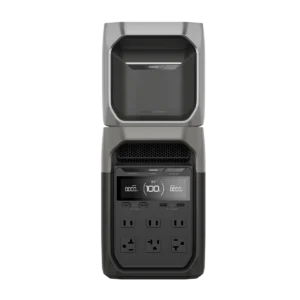
The DELTA 3 is the unit I point people to when they ask for one box that handles a real evening of load shedding: refrigerator, Wi-Fi router, TV, phone charging and LED lights, all at once. The 1,024 Wh LiFePO4 battery is rated for roughly 4,000 charge cycles — that is ten years of daily cycling before capacity drops meaningfully, which is why LiFePO4 chemistry is non-negotiable in 2026. The 1,800 W inverter with surge headroom starts refrigerator compressors without complaint, and it recharges from the wall in about an hour, so even short gaps between outages bring it back to full.
Run the numbers: a 150 W refrigerator plus 100 W of router, lights and phones draws about 250 W. On 1,024 Wh of usable LiFePO4, that is roughly 3.5 to 4 hours of runtime — a full evening outage. Add a 45 W laptop and you still clear three hours. Check your own appliance mix in the Appliance Wattage Database and the Battery Backup Calculator before you buy — capacity is the one thing you cannot upgrade later on a sealed unit.
Pros: LiFePO4 longevity, genuinely fast AC recharging, expandable with extra batteries later, solar input up to 500 W.
Cons: Heavier than the Jackery at this capacity; the app nags you to update firmware.
Check Current Price — EcoFlow DELTA 3 →
2. Bluetti AC180 — Best Value
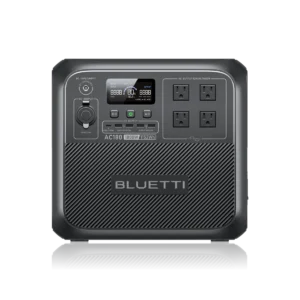
The AC180 consistently undercuts the DELTA 3 on price while carrying slightly more capacity at 1,152 Wh. Output is the same 1,800 W, chemistry is the same LiFePO4, and it will run the identical fridge-plus-essentials load for about 15 to 20 minutes longer. What you give up is charging speed — figure closer to 80 minutes for a full AC recharge — and a bulkier case. If your outages are predictable (scheduled load shedding rather than storm surprises), the slower recharge costs you nothing and the saved money buys a folding solar panel.
Pros: Best Wh-per-dollar in this class, 1,440 W turbo charging mode, quiet fans at low load.
Cons: Heavy for its size; app setup is clumsier than EcoFlow’s.
Check Current Price — Bluetti AC180 →
3. Anker SOLIX C1000 — Fastest Recharge
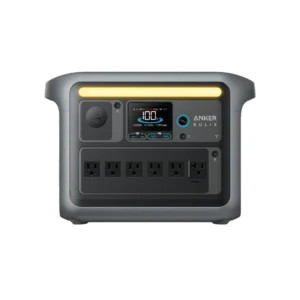
Anker’s pitch is simple: 0 to 80 percent in well under an hour. If your power comes back for short unpredictable windows and you need to bank energy fast before the next cut, the C1000 is built for exactly that rhythm. Capacity (1,056 Wh) and output (1,800 W) match the class leaders, and Anker’s electronics quality has been excellent across the SOLIX line. It is the unit I recommend for areas with rolling outages measured in hours, not days.
Pros: Class-leading recharge speed, compact for its capacity, 10-year design life on LiFePO4 cells.
Cons: Solar input capped lower than EcoFlow; fewer expansion options.
Check Current Price — Anker SOLIX C1000 →
4. Jackery Explorer 1000 v2 — Lightest
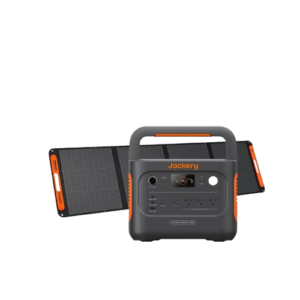
At roughly 11 kg the Explorer 1000 v2 is the easiest 1 kWh unit to actually carry between rooms, up stairs, or into a vehicle. Jackery finally moved to LiFePO4 with the v2 generation, fixing the biggest criticism of the older models. Output is 1,500 W — enough for a fridge, fans and electronics, but plan around it if you intend to run a microwave or kettle. For a bedroom backup station or a unit that travels with you, the weight saving is worth the output ceiling.
Pros: Lightest in class, simple interface your parents can operate, reliable brand support.
Cons: 1,500 W ceiling; slower solar charging than EcoFlow.
Check Current Price — Jackery Explorer 1000 v2 →
5. EcoFlow RIVER 3 — Budget Pick
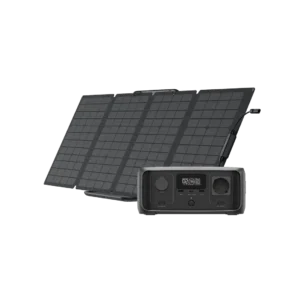
Not everyone needs to run a refrigerator. If your outage survival kit is Wi-Fi router, laptop, phone charging and an LED light, the RIVER 3’s 245 Wh does the job for a fraction of the price. That load is about 80 to 100 W, which means 2 to 2.5 hours of runtime — enough for most scheduled load-shedding blocks. It weighs under 5 kg and recharges in about an hour. Buy this as a first step, learn your real usage, then size up intelligently.
Pros: Genuinely affordable entry point, LiFePO4 at a budget price, very portable.
Cons: Will not start a refrigerator; small capacity fills up fast if you add loads.
Check Current Price — EcoFlow RIVER 3 →
How to Choose the Right Size
Ignore the marketing scenarios on the box. Do this instead: list what must stay on during an outage, look up each item’s wattage in our Appliance Wattage Database, add 20 percent for inverter losses, then multiply by your typical outage length in hours. That number in watt-hours is your minimum capacity. If a refrigerator is on the list, your unit needs at least 1,500 W of output with surge handling for the compressor start — this is where 300 W and 600 W budget units fail. Our Load Shedding Battery Planner automates this entire calculation, including your outage schedule.
One honest note: if your outages regularly exceed 6 to 8 hours, a sealed portable unit becomes an expensive way to buy watt-hours. At that point a proper LiFePO4 battery bank with an inverter — sized through our Solar System Calculator — costs less per stored kWh and expands as your needs grow. Portable stations win on convenience and safety; battery banks win on economics at scale.