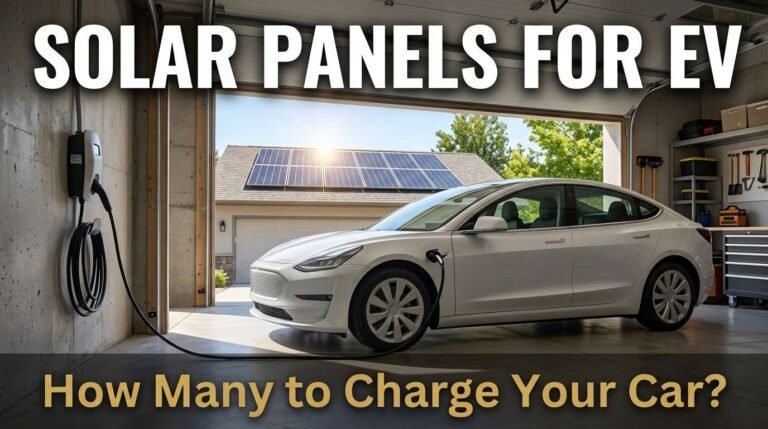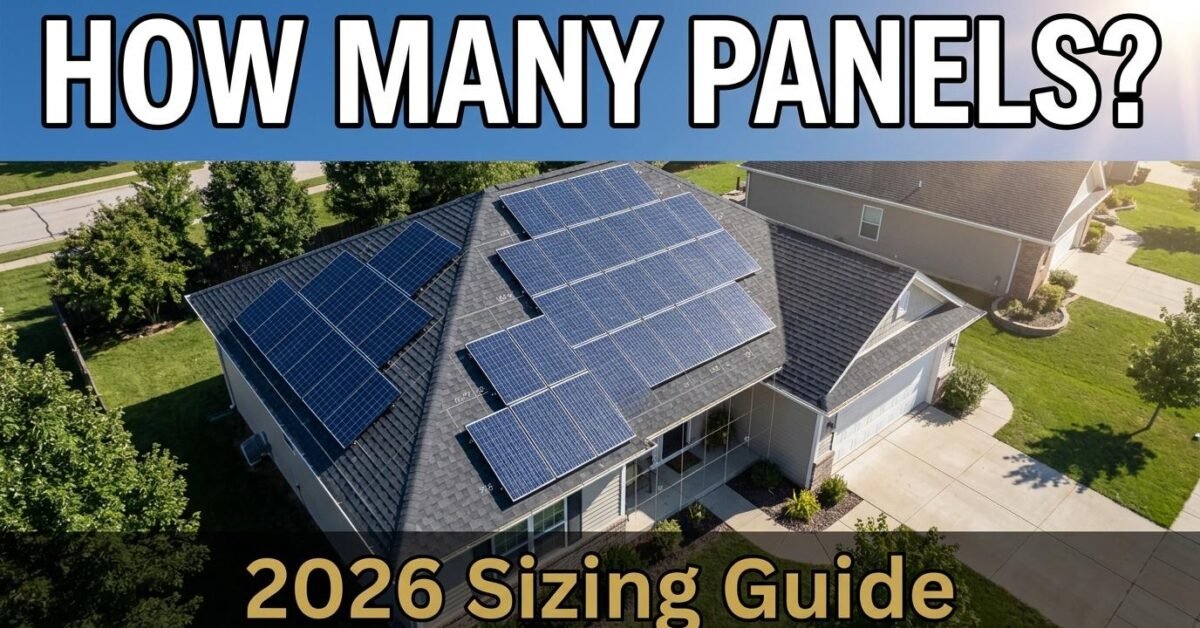
One of the first questions every homeowner asks when considering solar is simple: how many solar panels do I need? The answer depends on three things — your daily energy use, how much sunlight your location receives, and the wattage of the panels you choose. Get any of these wrong and you either overspend on panels you do not need, or undersize and still rely on the grid.
This guide walks you through the calculation step by step using real 2026 panel sizes, then shows you how to run the numbers instantly in our free Solar System Calculator.
The Formula: How Many Solar Panels Do I Need?
The core equation is straightforward. Take your daily energy consumption in kilowatt-hours, add a buffer for system losses (wiring, heat, dust, and inverter inefficiency — typically 20 percent), then divide by the output of a single panel per day.
Panels needed = (Daily kWh × 1.20) ÷ (Panel watts × Peak sun hours ÷ 1000)
For example, a US household using 30 kWh per day with 450-watt panels in a region that gets 5 peak sun hours would need: (30 × 1.20) ÷ (450 × 5 ÷ 1000) = 36 ÷ 2.25 = 16 panels. That gives you a 7.2 kW array, which is a common residential system size in states like Texas, Florida, and California.
Step 1: Find Your Daily Energy Use
Check your electricity bill for your monthly consumption in kWh, then divide by 30. The average US home uses about 900 kWh per month, which works out to 30 kWh per day. In the UK the average is closer to 10 kWh per day, and in Australia around 18 kWh per day. Your actual number is what matters — averages are just a starting point.
If you do not have your bill handy, our Solar System Calculator lets you enter your monthly units directly and converts them to a daily figure automatically.
Step 2: Know Your Peak Sun Hours
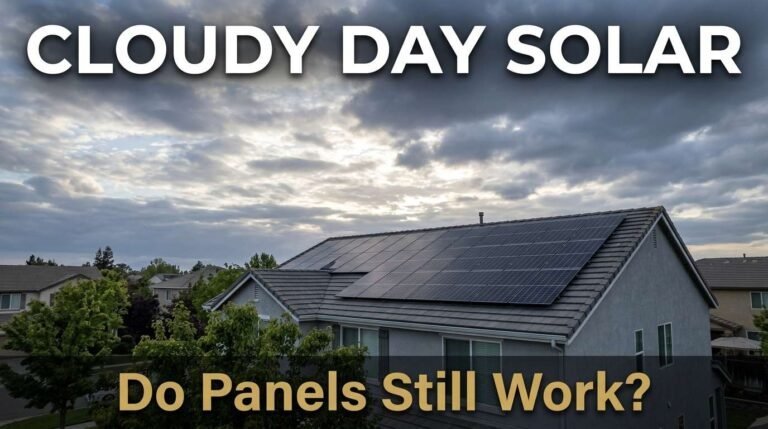
Peak sun hours measure usable sunlight intensity, not just daylight duration. One peak sun hour equals 1,000 watts per square meter hitting your panels. The US Southwest gets about 6 peak sun hours, the US South and Mediterranean about 5, the Midwest and Central Europe about 4.5, and the UK lowlands about 4. Northern Europe can drop to 3.
More sun means fewer panels. A homeowner in Arizona needs significantly fewer panels than one in Seattle for the same energy target, simply because each panel produces more energy per day.
Step 3: Choose Your Panel Wattage
Solar panel technology has advanced rapidly. In 2026, residential panels commonly range from 450 watts to 585 watts, with premium models reaching 670 watts. Commercial panels go up to 795 watts. The higher the wattage per panel, the fewer panels you need — and the less roof space you use.
A quick comparison for a 30 kWh per day home at 5 sun hours: you would need 16 panels at 450 watts, but only 12 at 585 watts or 10 at 670 watts. Choosing modern high-wattage panels can save significant roof space and mounting hardware costs.
How Many Solar Panels by House Size
While energy use matters more than square footage, house size gives a rough starting point. A small one-bedroom apartment using 8 kWh per day might need just 4 to 6 panels. A typical three-bedroom home using 25 to 30 kWh per day usually needs 12 to 18 panels. A large four-to-five-bedroom home running air conditioning, a pool pump, or electric heating might use 40 to 50 kWh per day and require 20 to 28 panels.
These ranges assume 585-watt panels at 5 peak sun hours with a 20 percent loss buffer. Your specific numbers will differ — which is exactly why a calculator beats a table.
What About Roof Space?
Modern panels need roughly 2.5 to 2.8 square meters each (about 27 to 30 square feet). A 16-panel system would require approximately 40 to 45 square meters of usable, unshaded roof area. South-facing roofs in the Northern Hemisphere and north-facing roofs in the Southern Hemisphere produce the most energy. East-west splits work but typically need 10 to 15 percent more panels to compensate.
Our calculator includes an automatic roof area estimate so you can instantly check whether your panels will actually fit.
Factors That Change Your Panel Count
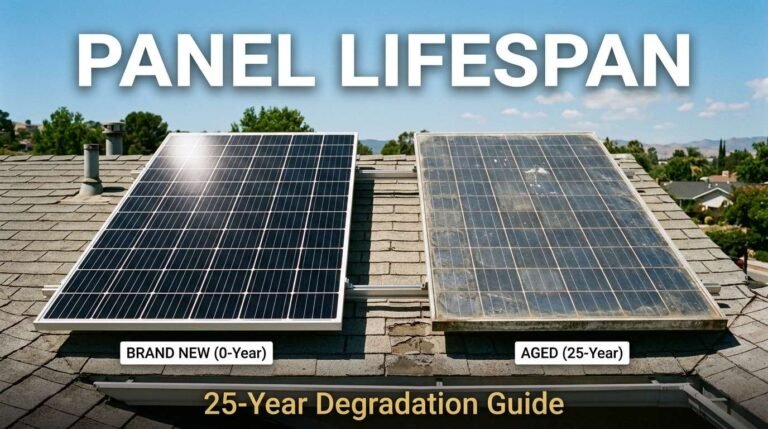
Several real-world factors can push your panel count up or down. Shading from trees, chimneys, or neighboring buildings reduces output and may require additional panels. Future load increases like electric vehicle charging, heat pumps, or a growing family mean you should consider oversizing now rather than adding panels later. Battery storage systems add round-trip losses that your panels need to cover. And panel degradation of about 0.5 percent per year over 25 years means a small initial buffer pays off long term.
Use the Calculator for an Exact Number
The formula above gets you a solid estimate, but our Solar System Calculator goes further. It lets you build your actual appliance load or enter your bill, choose your exact panel wattage (up to 795 watts or any custom value), set your region’s sun hours, and see the panel count, array size, and roof area all update in real time. It then continues through battery sizing, inverter selection, and a full cost comparison — so you walk away with a complete system, not just a panel count.