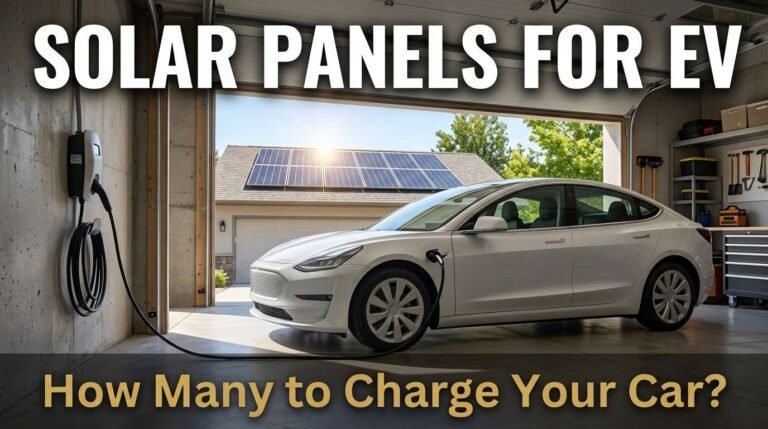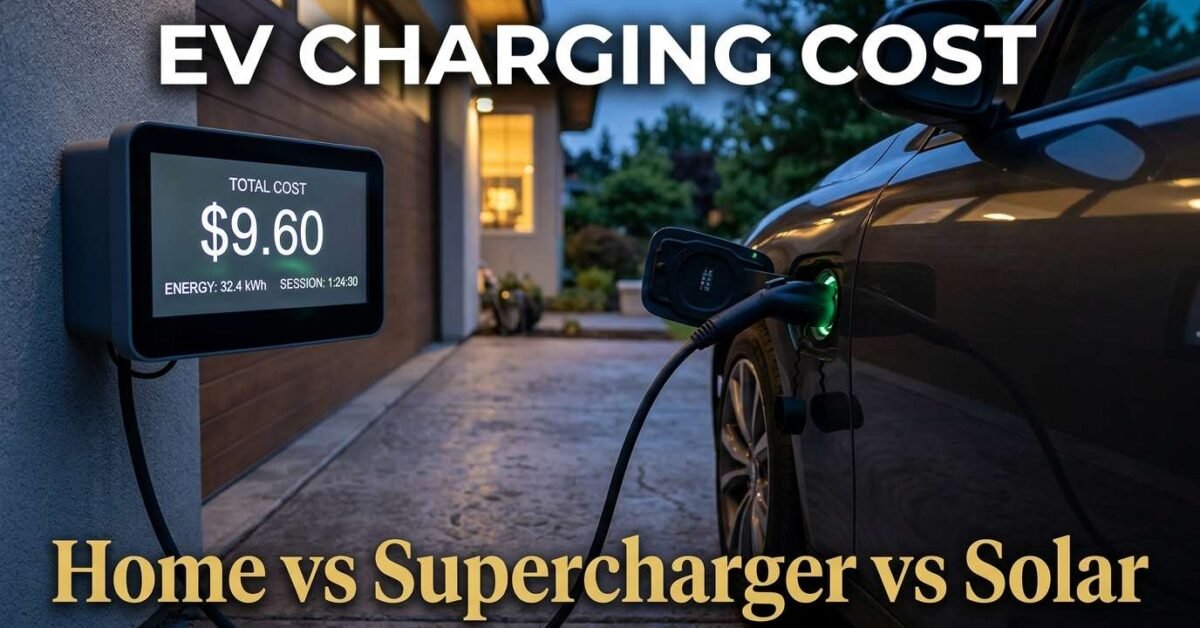
Charging a Tesla at home costs 7 to 12 dollars for a full charge at the US average electricity rate of $0.16/kWh. At a Tesla Supercharger, the same charge costs 15 to 25 dollars. With home solar panels, the cost drops to effectively zero. Our EV Charging Cost Calculator computes the exact cost for any Tesla model at any electricity rate.
Tesla Charging Cost by Model and Method
| Tesla Model | Battery | Home ($0.16/kWh) | Supercharger ($0.40/kWh) | Solar (free) |
|---|---|---|---|---|
| Model 3 Standard | 60 kWh | $9.60 | $24.00 | $0 |
| Model 3 Long Range | 75 kWh | $12.00 | $30.00 | $0 |
| Model Y Long Range | 75 kWh | $12.00 | $30.00 | $0 |
| Model S | 100 kWh | $16.00 | $40.00 | $0 |
| Model X | 100 kWh | $16.00 | $40.00 | $0 |
| Cybertruck | 123 kWh | $19.68 | $49.20 | $0 |
Cost Per Mile: Tesla vs Gas Car
A Tesla Model 3 Long Range gets 3.2 miles per kWh. At $0.16/kWh: $0.05 per mile. A comparable BMW 3-Series gets 30 MPG at $3.50/gallon: $0.117 per mile. The Tesla costs 57 percent less per mile to operate on electricity versus gasoline. Over 12,000 miles per year, that saves roughly $800 annually — or $8,000 over 10 years. With solar panels, the cost per mile drops to nearly zero, saving $1,400 per year versus gas.
Home Charging Setup Costs
Level 1 (standard 120V outlet): free — uses the mobile connector included with the car. Adds 3 to 5 miles per hour. Level 2 (Tesla Wall Connector, 240V): the charger costs $400 to $500, installation $300 to $1,000 depending on electrical panel distance. Adds 25 to 44 miles per hour. Level 2 is the recommended home setup — it fully charges overnight and can charge during solar production hours for maximum solar offset.
Charging with Solar: The Best Long-Term Value
A 2 to 3 kW solar addition (5-7 panels) produces enough electricity to fully offset average Tesla daily driving (30 miles/day = ~10 kWh). The panels cost $3,000 to $5,000 installed after the 30% tax credit and produce free EV fuel for 25+ years. Total lifetime fuel savings compared to gasoline: $15,000 to $25,000. Calculate your specific savings with solar in our EV Charging Cost Calculator — adjust the solar offset slider to see the impact.
Time-of-Use Rates and Smart Charging
Many utilities charge different rates depending on the time of day. Peak rates (4 PM to 9 PM) can be $0.35 to $0.55/kWh, while off-peak rates (midnight to 6 AM) drop to $0.08 to $0.12/kWh. On time-of-use plans, charging your Tesla at midnight instead of 6 PM can save 60 to 75 percent on charging costs. Every Tesla allows scheduled charging — set it to start at midnight and take advantage of the lowest rates automatically. On TOU plans, a full Model 3 charge drops from $20 at peak to $6 at off-peak.
Supercharger vs Home vs Destination Charging
Tesla Superchargers charge at $0.35 to $0.50/kWh — 2 to 3 times the home rate. They are essential for road trips but expensive for daily use. Destination chargers (at hotels, restaurants, shopping centers) are often free or included with parking — take advantage of these whenever available. For daily commuting, home Level 2 charging is always the cheapest option by a wide margin. A driver who charges exclusively at Superchargers spends $150 to $200 per month on charging. The same driver at home spends $40 to $60. With solar: $0 to $10.
Annual Charging Cost Comparison
| Charging Method | Model 3 (12,000 mi/yr) | Model Y (12,000 mi/yr) |
|---|---|---|
| Home charging ($0.16/kWh) | $600/year | $620/year |
| Home off-peak TOU ($0.10/kWh) | $375/year | $387/year |
| Supercharger only ($0.40/kWh) | $1,500/year | $1,548/year |
| Home with solar (free) | $0/year | $0/year |
| Comparable gas car (30 MPG) | $1,400/year | $1,400/year |
The savings are clear: home charging saves $800/year versus gas. Solar charging saves $1,400/year versus gas. Even Supercharger-only charging matches gas costs. Calculate your specific scenario in our EV Charging Cost Calculator.
Level 1 vs Level 2: Installation Cost and Charging Speed
Level 1 charging (standard 120V outlet) costs nothing to set up — every Tesla includes a mobile connector that plugs into any household outlet. It adds 3 to 5 miles of range per hour, which means an overnight charge (8 hours) adds only 24 to 40 miles. For average daily driving of 30 miles, Level 1 is technically sufficient but leaves zero buffer for longer driving days.
Level 2 charging (240V dedicated circuit) requires a Tesla Wall Connector ($400 to $500) and a dedicated 240V/50A circuit from the electrical panel ($300 to $1,000 for installation depending on panel distance). It adds 25 to 44 miles per hour — a full charge in 6 to 10 hours overnight with plenty of margin. For homes with solar, Level 2 is essential because it can charge the car during peak solar production hours, maximizing the direct solar offset. The total Level 2 installation cost of $700 to $1,500 pays for itself in Supercharger savings within 6 to 12 months if you were previously relying on Superchargers for daily charging.