The physical installation of solar panels on a residential roof takes one to three days for a standard system. But the total timeline from your first quote to flipping the switch is typically six to twelve weeks — and almost none of that time is spent on the roof. Understanding where the weeks actually go helps you set realistic expectations, avoid the most common delays, and in some cases shorten the process by weeks.
The Full Timeline: Quote to Power-On
A typical residential solar installation follows six stages. The physical rooftop work is stage five — everything before it is paperwork, design, and waiting.
Stage 1: Quotes and contract (1-2 weeks). You collect quotes from two to four installers, compare system sizes and pricing, and sign a contract. This is the stage where our Solar System Calculator saves you time — run your numbers before the first sales call and you will know immediately whether a quote is right-sized or padded. Our Solar Savings Calculator shows whether the quoted price delivers a reasonable payback.
Stage 2: Site survey and design (1-2 weeks). The installer visits your roof to measure, check structural integrity, assess shading, and photograph the electrical panel. They produce a final system design with panel placement, inverter location, and wiring path. Some companies now use satellite imagery and drone surveys to accelerate this step.
Stage 3: Permitting (2-6 weeks). This is where most timelines stall. Your installer submits plans to the local building department and the utility company. Permit approval times vary wildly: some jurisdictions approve in five business days, others take six weeks or more. Your installer handles this — you wait. In states with streamlined solar permitting (California, Colorado, New York), this step is faster. In municipalities with manual review processes, it is the bottleneck.
Stage 4: Equipment procurement (1-2 weeks, often parallel with permitting). Panels, inverters, racking, and wiring are ordered. Most installers stock common equipment, but specific panel models or battery systems may have lead times. If your installer is back-ordering a component, ask whether an in-stock equivalent gets you on the roof sooner.
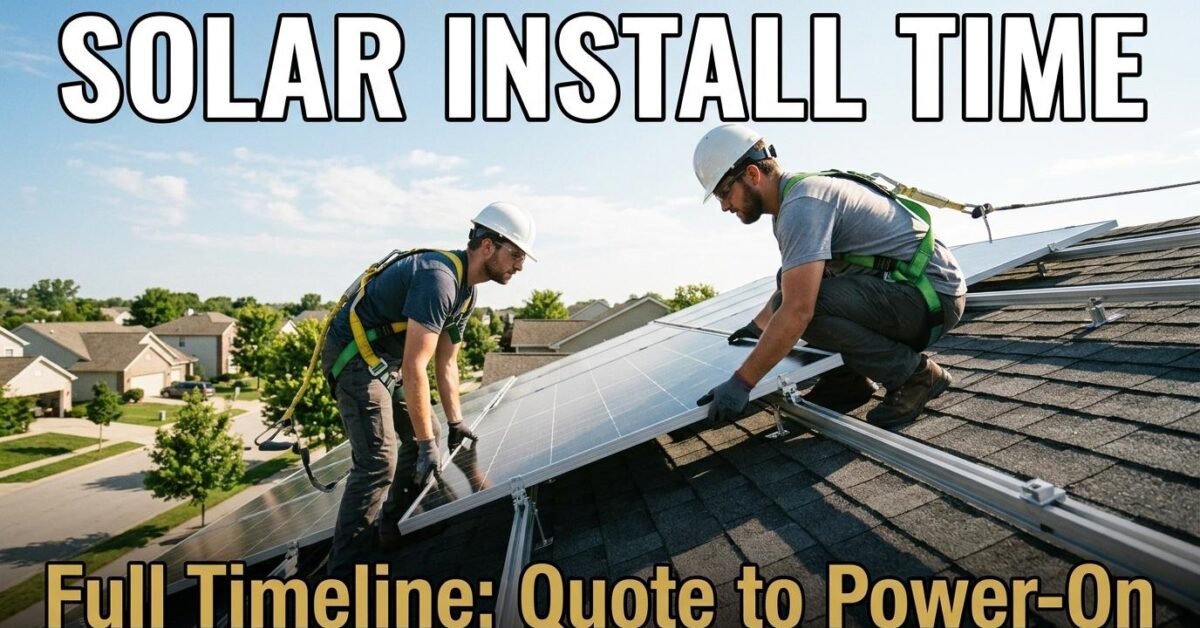
Stage 5: Physical installation (1-3 days). A crew of two to four arrives, installs the racking on your roof, mounts the panels, runs conduit to the inverter location, wires the inverter and breaker panel connection, and installs any battery system. A straightforward 6 to 10 kW rooftop system with a string inverter typically completes in one full day. Systems with battery backup, ground mounts, or complex roof geometry can take two to three days. Microinverter systems take slightly longer than string inverter systems because each panel gets its own unit.
Stage 6: Inspection and utility approval (1-3 weeks). The building inspector visits to verify code compliance. If passed, your installer submits the interconnection agreement to the utility. The utility installs or reprograms your meter for net metering (if applicable) and grants permission to operate (PTO). Until PTO is issued, your system may be installed but not legally producing — the inverter stays off or runs in a limited mode.
What Causes Delays
Permit backlogs are the number one delay — and they are entirely outside your control. The second most common delay is a failed inspection, usually due to a labeling error, a missing disconnect, or a conduit run that does not meet local code. These are installer errors, fixable in a day, but the re-inspection scheduling adds one to two weeks. Equipment shortages occasionally delay procurement, particularly for specific battery models or high-demand panels during peak installation season (spring and summer).
Roof issues discovered during the site survey — structural deficiency, old roofing that needs replacement before panels go on, asbestos-containing materials — can add weeks and significant cost. If your roof is older than 15 years, consider getting a roofing assessment before your solar quote so any repair is handled first, not mid-project.
How to Speed Up the Process
Choose an installer who handles permitting in-house rather than outsourcing it — this eliminates handoff delays. Ask about permit timelines in your specific jurisdiction during the sales call; good installers know their local averages to the week. Have your electrical panel information ready (brand, amperage, number of available breaker spaces) — this saves a return visit during the survey. And be flexible on equipment: if the installer has panels and inverters in stock that meet your sizing requirements, accepting their recommendation over a specific brand you researched can cut weeks off procurement.
Size your system before the first call with our Solar System Calculator — knowing your panel count, inverter size, and battery requirements in advance lets you evaluate quotes faster and eliminates the back-and-forth design revision cycle that adds a week to many projects.
Installation Day: What to Expect
The crew arrives early morning. Roof work comes first: mounting rails are anchored to rafters through the roofing material, with flashing installed at each attachment point to prevent leaks. Panels clip onto the rails — this is the fastest part. Wiring runs from the panel array through conduit down to the inverter, typically mounted near the main electrical panel. The inverter is wired into a dedicated breaker, and a production meter or monitoring device is installed. A final system test confirms every panel is producing and the inverter is communicating. The crew cleans up, and your roof looks essentially the same as before, plus panels.
You do not need to be home for the full installation, but someone should be available for the first hour (to answer questions about interior wiring paths) and the last hour (for the walkthrough and monitoring setup). Your power will be off for 30 to 60 minutes during the electrical panel connection — plan accordingly.
DIY vs Professional Installation Time
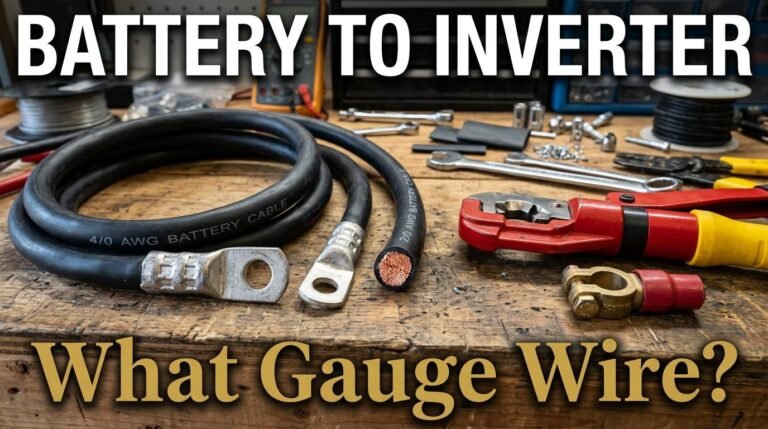
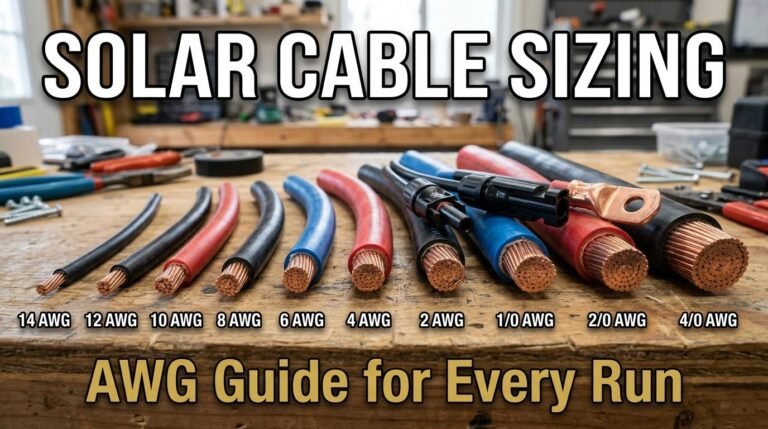
A DIY installation of the same system takes most homeowners two to four weekends — roughly 30 to 50 hours of work spread over several weeks, compared to 8 to 24 hours for a professional crew. The time difference comes from experience: a crew that installs systems daily moves through the racking and wiring at three to four times the speed of a first-timer. Permitting and inspection requirements are the same regardless of who installs, so the paperwork timeline does not change. Use our Wire Gauge Calculator to size your cables correctly if you are going the DIY route — undersized wire is the most common DIY error and the most common inspection failure.
Size your solar system before getting quotes →
⚡ Free Solar Sizing Cheat Sheet
Get our one-page guide to sizing panels, batteries and inverters — plus weekly solar tips. No spam, unsubscribe anytime.
By subscribing you agree to our privacy policy. We'll email your guide and occasional solar tips — never spam.