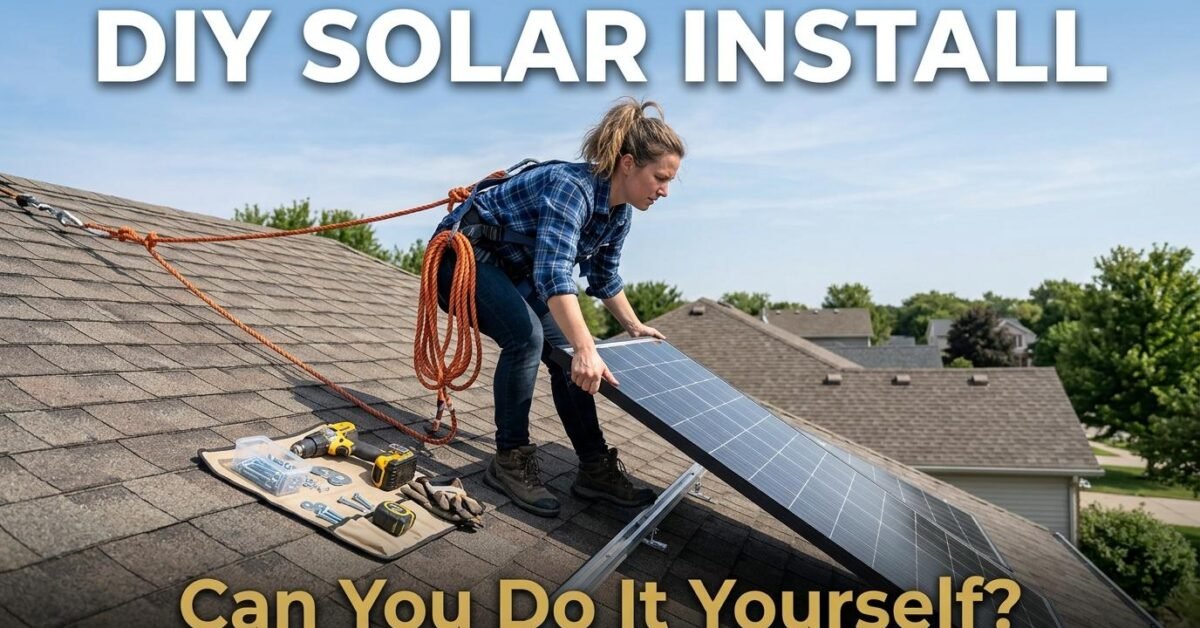
You can legally install solar panels yourself in most US states and many other countries. Whether you should depends on three things: your comfort working on a roof, your willingness to learn basic electrical wiring, and your local permitting requirements. The savings are substantial — 40 to 60 percent of the installed cost is labor — but the mistakes can be expensive and dangerous. This guide covers what is realistic, what is not, and where the line falls.
What DIY Solar Actually Saves
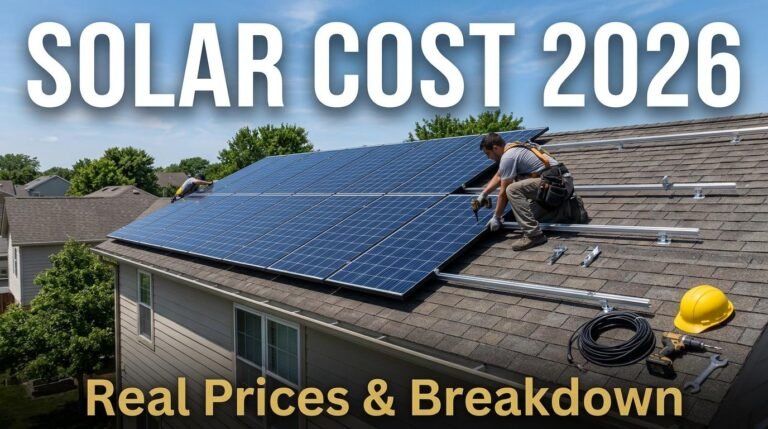
A professionally installed 8 kW residential system in the US costs roughly 20,000 to 26,000 dollars before incentives. The equipment — panels, inverter, racking, wiring, breakers — accounts for 8,000 to 12,000 dollars of that. The remainder is labor, overhead, sales commission, and installer margin. A DIY installation of the same equipment costs you only the materials plus permit fees, typically 9,000 to 13,000 dollars — a saving of 10,000 to 14,000 dollars. The federal ITC still applies to DIY installations (you claim it on your personal tax return), so the 30 percent credit reduces your out-of-pocket to roughly 6,300 to 9,100 dollars for an 8 kW system.
Use our Solar Savings Calculator to compare the payback period at the professional cost versus the DIY cost — the difference in payback is dramatic, often two to three years shorter.
What You Need to Know Before Starting
Permits are not optional. Nearly every jurisdiction requires a building permit and an electrical permit for a solar installation, even on your own home. The permit process is the same whether you hire a company or do it yourself: submit plans, get approval, pass inspection. Some jurisdictions require a licensed electrician to make the final connection to the main panel — you can do everything else yourself, but a licensed professional handles the last two hours of work. Check your local building department’s requirements before buying equipment.
Roof work is real. You will drill holes in your roof and attach lag bolts to rafters. Every penetration must be properly flashed to prevent leaks. If you are uncomfortable on a roof or have a steep pitch (above 6:12), the roof work alone may justify hiring a professional. Falls from residential roofs are a leading cause of construction injuries.
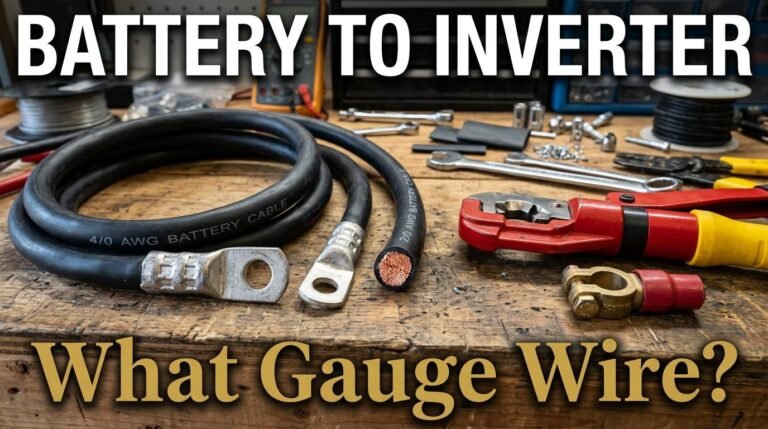
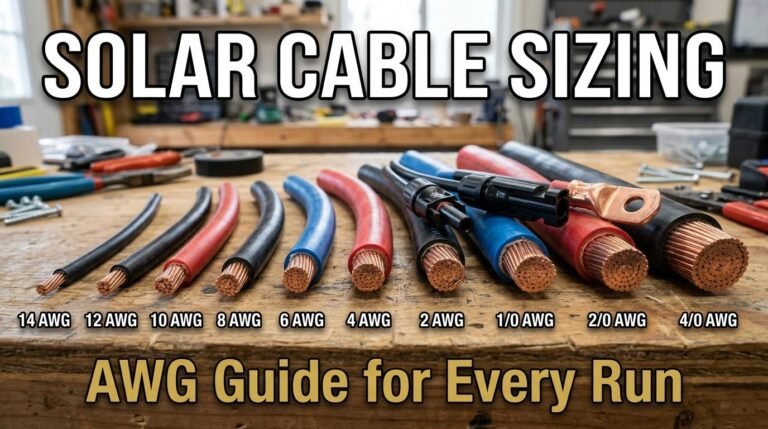
Electrical work requires precision. DC wiring from panels to inverter, AC wiring from inverter to breaker panel, grounding, and rapid shutdown compliance are all code-inspected. Errors are not cosmetic — they are fire and electrocution hazards. Our Wire Gauge Calculator sizes your cables correctly for the run length and current, and our Solar System Calculator determines the correct inverter and controller ratings. But knowing the numbers is different from crimping, torquing, and routing correctly — study the NEC (National Electrical Code) sections on photovoltaic systems before you start.
The Best DIY Approach: Hybrid
The most practical DIY approach is hybrid: you do the mechanical work (racking, panel mounting, conduit runs) and hire a licensed electrician for the final wiring and panel connection. This captures 60 to 70 percent of the labor savings while keeping the dangerous and code-critical electrical work in professional hands. The electrician visit typically takes two to four hours and costs 200 to 500 dollars — a fraction of a full installation contract.
DIY Solar Kits
Companies like Renogy, BougeRV, and several online suppliers sell pre-designed DIY solar kits that include panels, inverter, racking, wiring, and installation guides matched to your roof type. These kits simplify the equipment selection process — you do not need to individually source compatible components. Our Solar System Calculator tells you the specifications your kit needs to meet: panel wattage, inverter kVA, controller amperage, and battery capacity. Match those numbers to a kit and you know it is correctly sized.
Where DIY Does Not Work
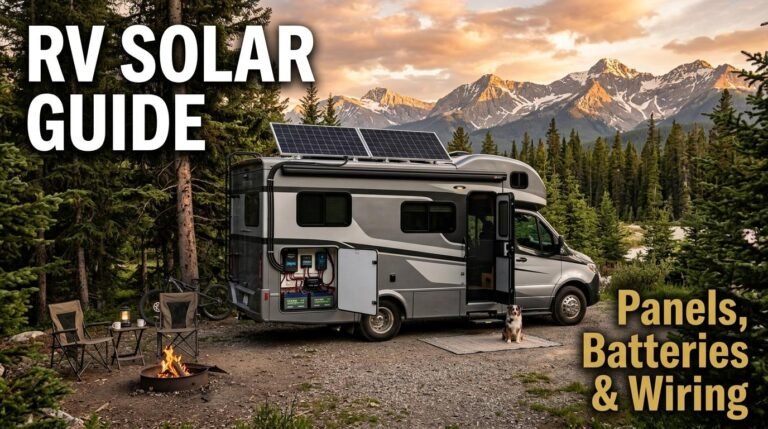
Grid-tied systems with net metering usually require an installer’s license or a licensed electrician’s sign-off for the utility interconnection agreement. If your utility requires a licensed installer on the application, DIY is limited to the mechanical work. Off-grid systems have no utility involvement, making them fully DIY-compatible — this is why off-grid cabins, RVs, and sheds are the most common DIY solar projects.
Some HOAs and local regulations restrict who can perform solar installations. Warranty coverage may also differ: panel manufacturers honor product warranties regardless of who installs, but some inverter warranties require professional installation documentation. Read the warranty terms before buying.
The Bottom Line
DIY solar installation is a realistic project for anyone with general construction skills, basic electrical knowledge, and the discipline to follow code requirements exactly. The savings are meaningful — often enough to add a battery that would not fit the budget with professional installation. Start by sizing your system in our Solar System Calculator, price the equipment from kit suppliers, and check your local permit requirements. If the permit office and your comfort level both say yes, you have a viable project.
⚡ Free Solar Sizing Cheat Sheet
Get our one-page guide to sizing panels, batteries and inverters — plus weekly solar tips. No spam, unsubscribe anytime.
By subscribing you agree to our privacy policy. We'll email your guide and occasional solar tips — never spam.